Bildon Steel Bildon Steel

Why Is Structural Steel Good for Green Buildings?

Time:2026-09-25 Author:Aria
0%

Why Is Structural Steel Good for Green Buildings? The question matters because buildings carry a significant climate burden. The 2024 Global Status Report for Buildings and Construction, published by UNEP and the Global Alliance for Buildings and Construction, says the sector produced 37% of global energy- and process-related CO₂ emissions in 2022. Material choices deserve careful scrutiny.

So, what are the green building benefits of structural steel? Factory fabrication can reduce on-site cutting and material waste, while long spans create open interiors that may adapt to new uses. Steel components can also be dismantled and reused when connections and design allow. World Steel Association guidance estimates that recycling one tonne of steel saves about 1.5 tonnes of CO₂, though real outcomes depend on the production route and electricity mix. Architect Carl Elefante, a former American Institute of Architects president, offered a useful principle: “The greenest building is the one that is already built.” His point supports designing for long service life, not just choosing a recyclable material.

That matters. Steel alone does not make a building green. Its upfront emissions can be substantial, and recycled content varies by product and supplier. Project teams should compare product-specific environmental product declarations, request transparent sourcing data, and assess reuse alongside new construction. Details count: a bolted connection may be easier to take apart than a welded one. The evidence is promising, but not automatic. Structural steel performs best when durability, efficient design, reuse, and verified environmental data work together.
Why Is Structural Steel Good for Green Buildings?

Structural Steel and Its Role in Green Buildings

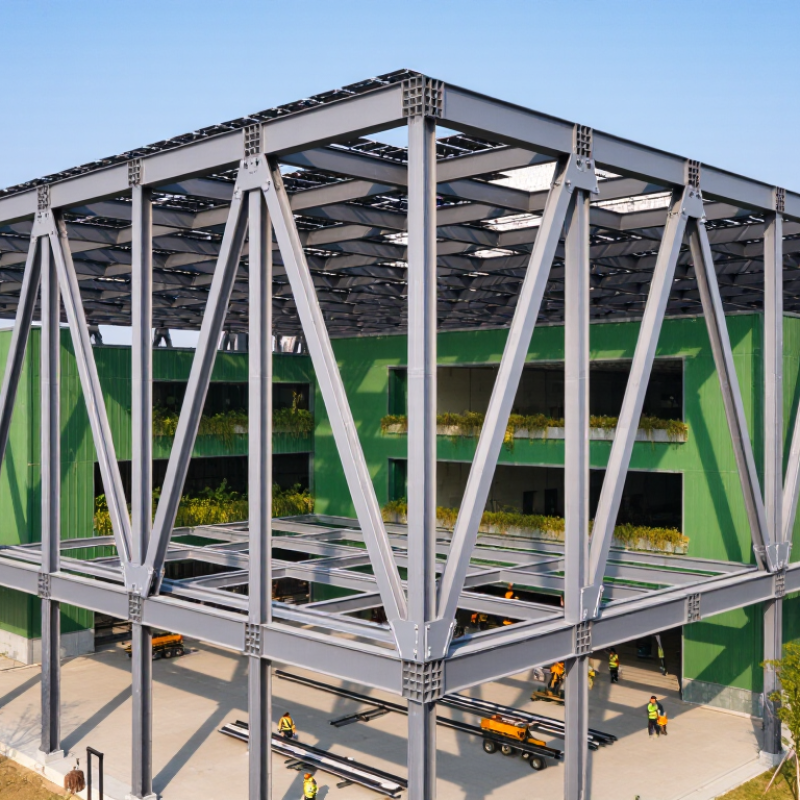
Structural steel can support green buildings by making efficient, adaptable structures possible. Its strength allows long spans with fewer interior columns, which can improve daylight access and make rooms easier to reconfigure. A flexible floor plan may stay useful longer instead of requiring major reconstruction. Less waste. Steel components can also be fabricated off-site, where accurate cutting and assembly help limit scrap. At the site, a crane can place prepared beams quickly, though transport and lifting still use energy.

Steel is not automatically green. Producing new steel can create substantial emissions, so project teams should compare environmental product declarations and check the material’s recycled content. Those figures vary by supplier and production method. Reuse can offer another benefit: bolted connections may let beams be removed and used again, if their condition and dimensions suit a future project. Details matter. Designers can also reduce material demand by coordinating spans, loads, and connection details early. A lighter frame may reduce foundation requirements, but only a project-specific analysis can confirm that. Choosing steel for its recyclability alone is not enough; its sourcing, construction, durability, and end-of-life plan all shape its actual contribution to a greener building.

How Steel Production Affects Environmental Impact

Steel’s environmental impact begins long before a beam reaches a building site. In a traditional blast furnace, iron ore is reduced using coke, and the process releases substantial carbon dioxide. Making coke also requires energy. The exact footprint depends on the mill, its fuel sources, and production efficiency. These details can vary widely. A steel section’s appearance tells us little about its manufacturing emissions.

Electric-arc furnaces can melt recycled scrap, often using less energy than ore-based production. Their climate impact still depends on the electricity mix and how much virgin iron is added. Recycling is valuable, but it is not impact-free. Scrap must be collected, sorted, transported, and melted; impurities can also limit its reuse. That part is easy to overlook. For a project, compare product-specific environmental declarations and check whether figures cover steelmaking alone or additional processing. Ask about recycled content and production route, too. Yet numbers are not always directly comparable: different boundaries and assumptions can shift results. Reusing a beam can avoid some new production, though inspection and adaptation still take work.

Recycled Content and Material Reuse in Steel Construction

Structural steel can support greener buildings through both recycled content and direct material reuse. Many steel products contain recycled scrap, though the share varies by mill, production route, and available supply. A project team should check product-specific environmental declarations rather than assume every beam has the same profile. Details matter.

When scrap is remelted, steel can become new structural sections while retaining useful performance. However, recycling still uses energy, and the emissions impact depends partly on how that energy is generated. Recycled content alone does not tell the whole story. It is one useful measure, not a complete environmental verdict.

Direct reuse can avoid remelting altogether. A carefully inspected beam recovered from a demolished warehouse may be suitable for another building, especially when its dimensions and history are documented. Engineers need to verify its condition, grade, connections, and any damage before specifying it. Coatings or altered holes may complicate the work. This is where the story gets less tidy. Reused steel can require extra surveying, testing, and design coordination, and not every member will fit a new layout. Planning for standard lengths, bolted connections, and clear records can make future recovery more practical. A few saved beams are still a start.

Why Is Structural Steel Good for Green Buildings? — Recycled Content and Material Reuse in Steel Construction

Sustainability Dimension Relevant Data or Fact What It Means for a Building Project How to Verify or Improve It
Recycled content Recycled content varies by product, production route, and region; there is no single value that applies to all structural steel. Steel made with recycled feedstock can reduce demand for virgin raw materials. The environmental benefit depends on the product’s actual production data. Request a product-specific environmental product declaration (EPD) or other documented recycled-content information. Check how the content is reported.
Recyclability Steel is a recyclable material and can be recycled repeatedly without losing its fundamental material properties. Steel recovered at the end of a building’s life can become feedstock for new steel products instead of being discarded. Plan for selective deconstruction and identify steel components in the building documentation before demolition or refurbishment.
Direct component reuse Structural members can sometimes be reused in another building, but suitability depends on their condition, dimensions, connection details, and verified structural properties. Reusing a member can avoid the need to manufacture a replacement, while retaining more of the component’s existing form and value than recycling it into new material. Record member sizes and grades, inspect for damage and corrosion, and have a qualified engineer assess capacity and compliance with the new design.
Design for disassembly Bolted connections can generally be easier to dismantle than welded or concealed connections, although the full design and site conditions matter. Accessible, reversible connections can make future alterations and recovery of steel members more practical. Use accessible connection details where appropriate, minimize unnecessary composite or permanent attachments, and retain accurate as-built records.
Environmental impact assessment An EPD reports environmental indicators for a defined product and life-cycle scope; results should be compared using consistent scopes and declared units. Steel’s environmental impact cannot be judged from recycled content alone. Production route, transport, fabrication, service life, and end-of-life assumptions also matter. Compare current EPDs that use compatible product categories, life-cycle modules, and declared units. Follow the project’s applicable assessment method.
Material traceability Records such as material certificates, member schedules, and connection drawings can help identify steel and assess it for future use. Better documentation reduces uncertainty during refurbishment, deconstruction, and potential component recovery. Maintain a digital material record with member dimensions, grade, location, connection type, and available inspection or test information.
Project outcomes depend on product-specific data, structural design, construction practice, and end-of-life planning.

Structural Efficiency and Resource Conservation

Structural steel supports resource conservation when its strength is matched to the building’s actual needs. A carefully designed beam can span an open room with fewer interior columns. That may reduce material use and leave flexible space for future layouts. In a busy workshop, fewer columns can also mean clearer routes for people and equipment. Small details matter. Standardized member sizes and accurate fabrication can help limit offcuts before steel reaches the site.

Steel components can sometimes be disassembled and reused, while steel is widely recyclable at the end of a building’s life. Reuse is not automatic: connections, condition, and future design requirements all need checking. Nor does an efficient frame erase the impact of producing new steel. Designers should compare structural options early and consider the building’s expected lifespan. I’d be cautious about calling any one frame “green” without looking at its material quantities and practical reuse potential.

Tips: Ask for a material takeoff and a clear plan for adaptable connections. Check whether offcuts can be reduced through fabrication planning.

Designing Steel Buildings for Long-Term Adaptability and Recycling

Why Is Structural Steel Good for Green Buildings?

Designing Steel Buildings for Long-Term Adaptability and Recycling

A green building should remain useful when its occupants, equipment, or purpose change. Structural steel makes that easier: clear spans can leave fewer interior columns, while bolted connections can help crews alter or dismantle components. A floor planned for offices today may later need different partitions, services, or circulation. That flexibility is not automatic. Designers must allow for future loads, accessible connections, and service routes before construction begins. Retrofitting those details later can be difficult and costly.

Recycling also matters, but recovery is not the same as reuse. The UK structural steel sector reports a 99% recovery rate for steel from demolition, including material recycled and reused, according to SteelConstruction.info.

Reuse can retain more of a component’s original value, but it depends on careful deconstruction, inspection, and reliable records. worldsteel estimates that using one tonne of steel scrap avoids about 1.5 tonnes of carbon dioxide emissions compared with primary steel production. That figure is an industry estimate, not a guarantee for every project; energy sources and processing conditions affect results.

Marking member sizes, connection details, and steel grades can help future teams assess what can be reused.

A small but often overlooked detail. Reuse still needs planning.

FAQS

Why does steel production create carbon emissions?

Traditional blast furnaces use coke to reduce iron ore. Making coke also takes energy. Emissions vary by mill and fuel source.

Does recycled steel have no environmental impact?

No. Scrap must be collected, sorted, transported, and melted. Electricity sources and added virgin iron also affect its footprint.

How can a project compare steel products?

Review product-specific environmental declarations. Check which production stages they cover, and ask about recycled content and production routes. Figures may use different boundaries.

Is reusing a steel beam better than recycling it?

Direct reuse can avoid remelting and retain more of the beam’s value. But inspection and adaptation take work. Not every beam will fit.

What should engineers check before reusing a beam?

Verify its condition, grade, dimensions, connections, and damage. Coatings or altered holes may complicate the next design.

How can a building make future steel reuse easier?

Plan accessible bolted connections, standard lengths, and clear records. Mark steel grades and member sizes. Small details matter.

Can flexible steel buildings adapt to new uses?

Clear spans can leave fewer interior columns, making layout changes easier. Future loads and service routes still need planning. It is not automatic.

What does a high steel recovery rate mean?

One UK sector report gives a 99% recovery rate from demolition, counting recycled and reused steel. Recovery does not mean every beam is reused.

How much carbon dioxide can scrap steel avoid?

An industry estimate says one tonne of scrap can avoid about 1.5 tonnes of carbon dioxide versus primary production. Results vary. It is not a project guarantee.

Conclusion

Structural steel plays an important role in green building because it combines strength, efficiency, and long-term usability. A key question is: what are the green building benefits of structural steel? Its high strength-to-weight ratio allows engineers to create durable structures with less material, reducing resource consumption and construction waste. Modern steel production can also incorporate recycled content, while steel components can often be recovered, reused, or recycled at the end of a building’s life. These practices help reduce the demand for raw materials and support a more circular construction process.

Steel buildings can also be designed for adaptability, allowing spaces to be expanded, renovated, or repurposed instead of demolished. This extends a structure’s service life and lowers the environmental impact associated with reconstruction. Although steel production requires significant energy, improvements in manufacturing efficiency, emissions control, recycling, and responsible material management can make structural steel a practical choice for durable and resource-conscious green buildings.

Aria

Aria

Aria is a dedicated marketing professional with a deep passion for innovative strategies and a keen understanding of our company's product offerings. With a wealth of experience in the industry, Aria excels at crafting engaging content that highlights the unique features and benefits of our......