 Bildon Steel
Bildon Steel
Bildon Steel
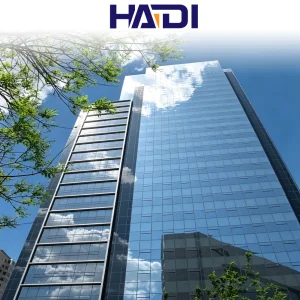
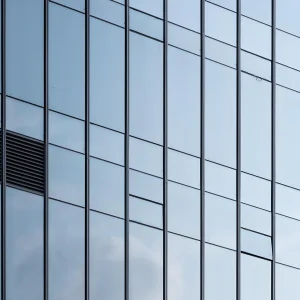
Pre-engineered, factory-assembled unitized modules customized for high-rise commercial structures and extreme thermal resistance parameters.
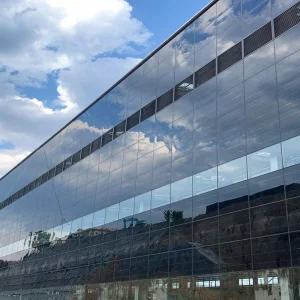
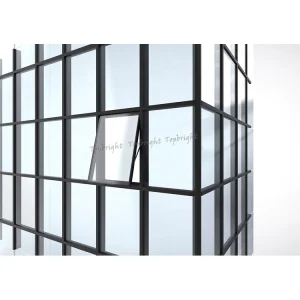
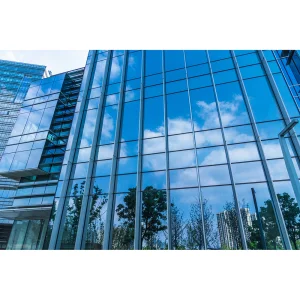
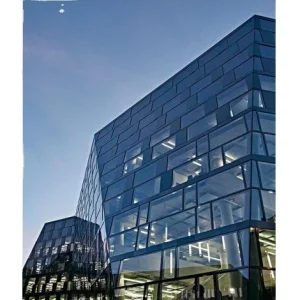
An analysis of regional building code integrations, structural requirements, and climatic constraints driving envelope design.
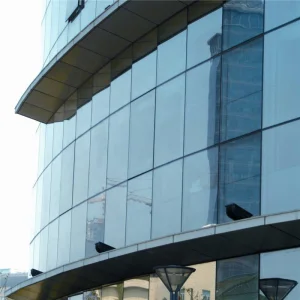
Modern architectural layouts in major Russian metropolitan hubs—spanning from the highly dense skyscraper clusters of Moscow City to the Baltic-exposed coastal developments in St. Petersburg and high-altitude industrial structures across Siberia—increasingly demand the deployment of advanced Unitized Glass Curtain Walls. Driven by the stringent thermal protection standards outlined in Russian construction regulations (specifically SP 50.13330.2012 "Thermal Protection of Buildings"), structural envelopes are no longer evaluated solely on visual transparency, but on complex heat-retention performance indices, seismic flexibility, and structural deflection reserves.
Traditional stick curtain walling systems, which require extensive on-site assembly, glazing, and sealing, are heavily constrained by Russia's severe winter seasons. With ambient temperatures dropping below -20°C for several months, on-site structural silicone curing and gasket elasticity are severely compromised. Unitized curtain walls overcome this seasonal construction bottleneck. Manufactured and glazed within controlled factory environments, the modular units are shipped to sites in Saint Petersburg, Novosibirsk, or Ekaterinburg ready for rapid mechanical anchoring. This system drastically compresses project delivery timelines by up to 50% and eliminates weather-dependent quality variations.
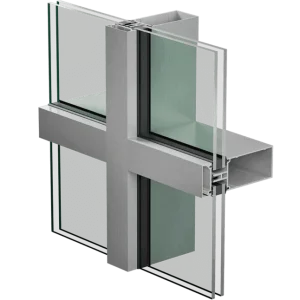
To withstand severe temperature swings, our facade units integrate highly specialized material science. The central structural profiles employ premium aluminum alloy profiles (specifically 6063 T5/T6 and 6061 T6) coupled with high-performance polyamide thermal insulation strips (PA66 GF25). These thermal breaks interrupt the thermal bridge, preventing interior condensation, frost formulation, and localized structural failure during winter periods. Multi-chamber EPDM profiles are utilized for gasket systems, retaining elasticity and sealing properties down to -50°C to guarantee long-term air and water tightness under high pressure differential tests.
Maximizing passive thermal performance and active renewable generation in structural building envelopes.
With global attention shifting towards carbon reduction and operational cost optimization, Russia’s commercial real estate regulations are imposing rigorous energy-efficiency ratings on new projects. The adoption of Triple-Glazed Insulating Units (IGUs) is the default approach for mid-to-high rise developments. Our systems leverage high-selectivity double and triple silver Low-E coatings, minimizing radiant heat loss during winter while reflecting solar infrared heat during summer. The inner cavities are typically filled with 90% purity Argon gas and spaced using structural warm-edge stainless steel/polymer composite spacers to minimize perimeter heat leakage.
For forward-looking master plans, we integrate Building Integrated Photovoltaics (BIPV) using Cadmium Telluride (CdTe) glass. This solar technology is exceptionally suited for high-latitude countries like Russia, where solar angles are low and diffuse light is common. The CdTe layers are laminated directly into the outer glass panes of the unitized facade panels, transforming structural walls into power generation elements. This mitigates peak energy consumption in public administration buildings, commercial hotels, and corporate headquarters while offering visual integration matching standard reflective architectural glass.
High-rise designs in wind-swept areas demand that unitized curtain wall assemblies withstand immense dynamic loads. Our structural frames incorporate internal expansion joints, drainage paths, and interlocking male-female vertical mullion profiles. Under high wind pressures or seismic loads, the system absorbs building drift through microscopic movements between panels, protecting the structural glass from stress localization. Acoustic dampening is managed using laminated acoustic PVB interlayers, reducing heavy urban traffic noise by up to 45 decibels (dB), establishing quiet environments inside high-end offices and residential high-rises.
Integrating advanced heavy steel structures fabrication with robotic curtain wall assembly lines to deliver end-to-end structural envelopes.
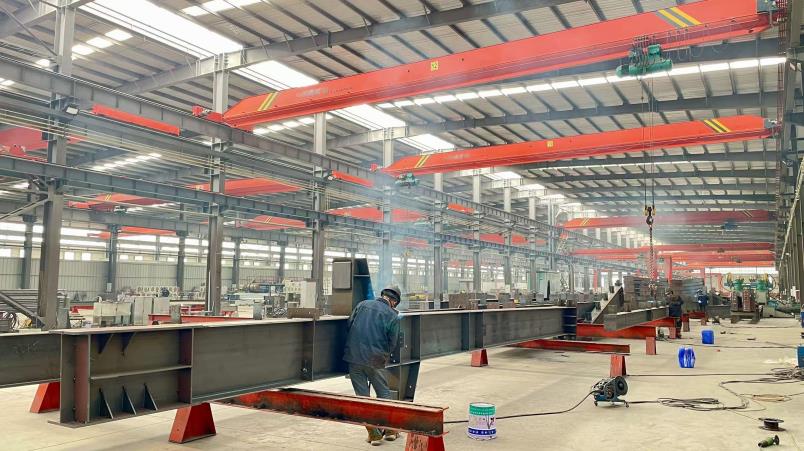
As an integrated powerhouse in steel structures and high-performance facades, Shandong Bildon Steel Co., Ltd. offers a unified fabrication platform that coordinates structural framing with external glass skins. The company strictly operates internationally recognized management systems, including ISO9001 Quality Management System, ISO45001 Occupational Health and Safety Management System, and ISO14001 Environmental Management System. This ensures that every aluminum extrusion, steel bracket, weldment, and glazed panel meets the highest metrics of international quality control and reliability.
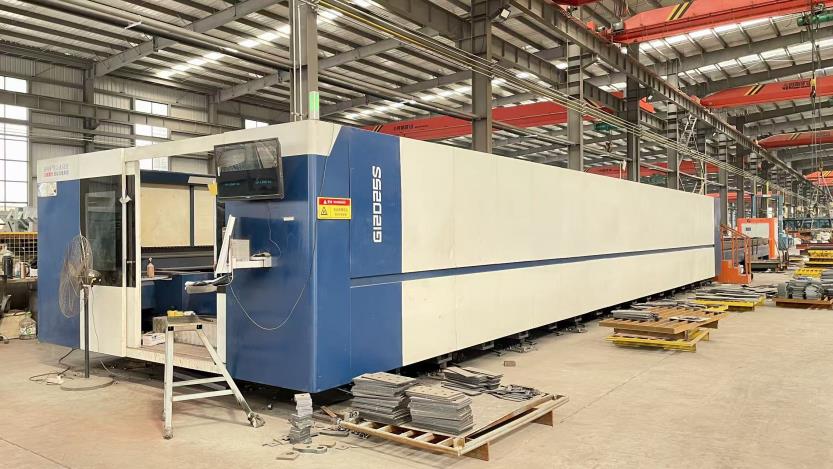
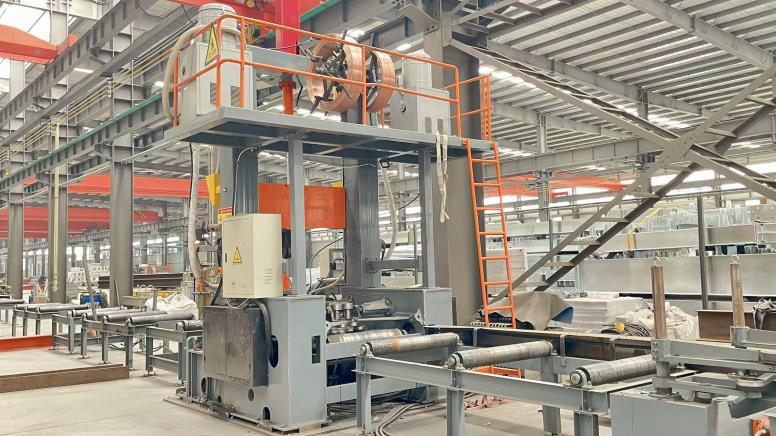
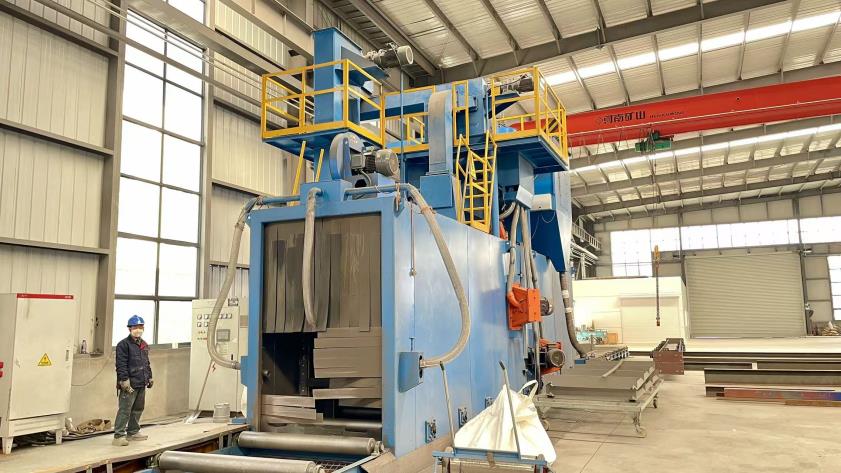
Equipped with advanced non-destructive testing (NDT) and quality inspection capabilities, Bildon Steel maintains rigorous control over every stage of production and construction. The manufacturing lines feature state-of-the-art multi-axis CNC machines, automated silicon injection robots, and computerized glass cutting and tempering centers. By integrating structural heavy steel components, nuclear power infrastructure supports, and curtain wall engineering under a single quality control workflow, we eliminate coordination errors between the primary structure and the facade cladding, providing Russian developers with structural security and accelerated delivery speeds.
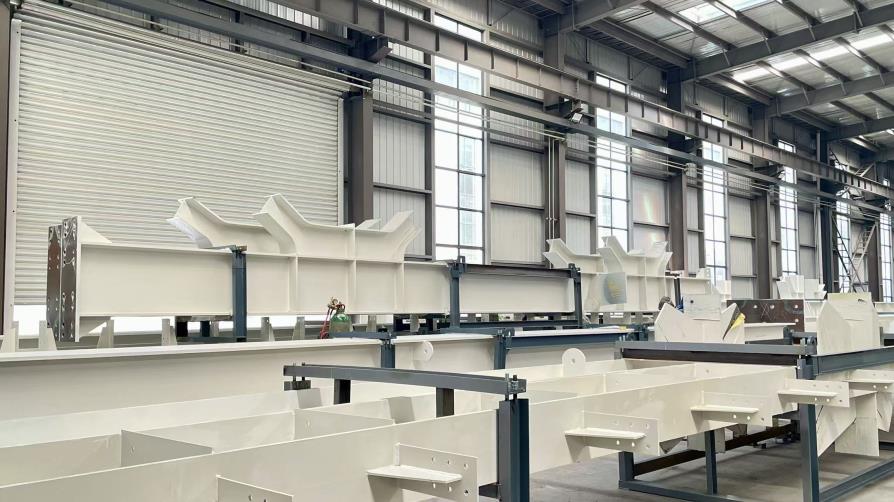
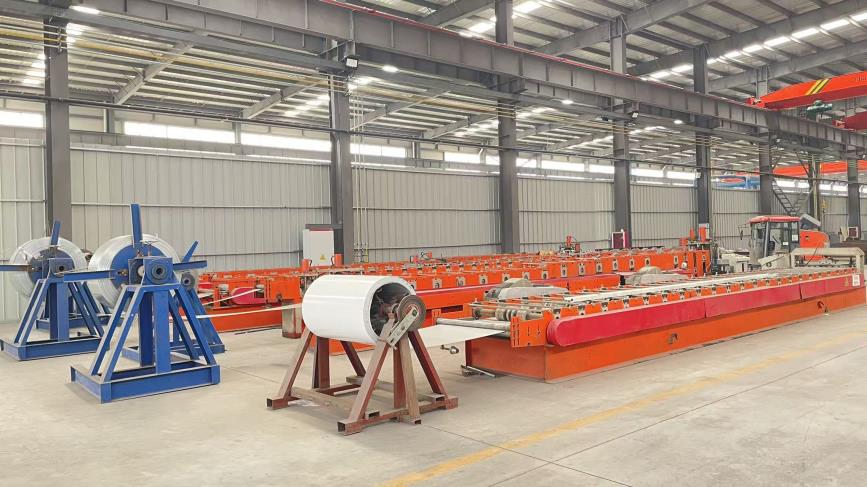
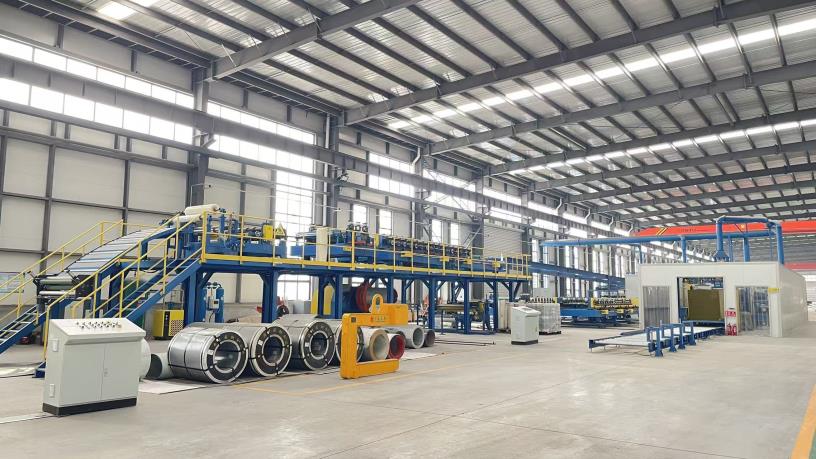
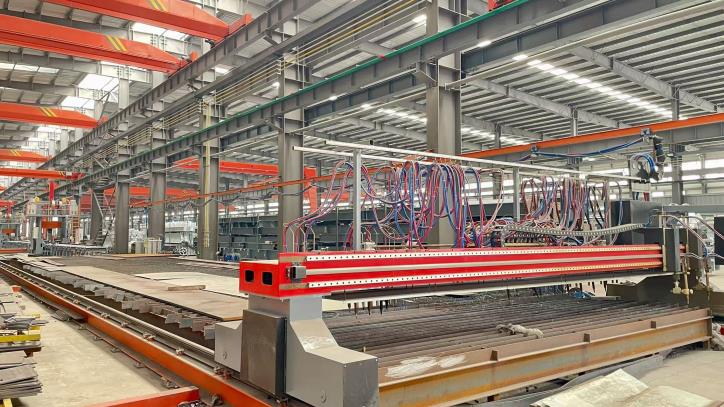
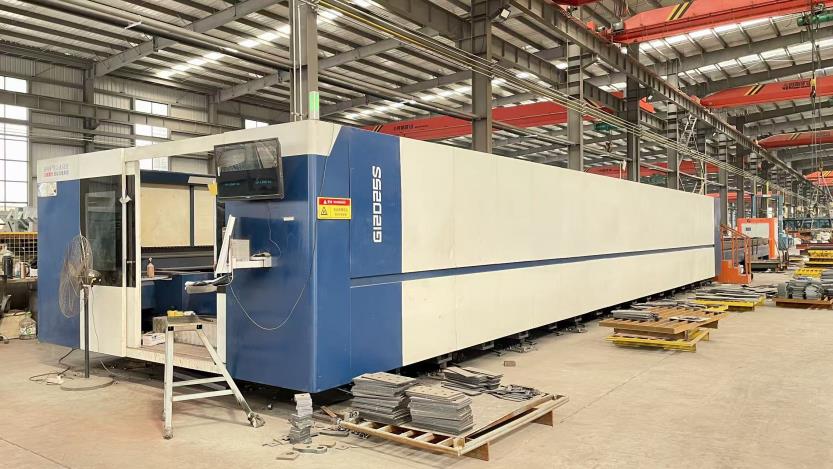
Inside Shandong Bildon Steel Co., Ltd. automated manufacturing floor, showcasing advanced equipment lines producing high-tolerance structural profiles.


Optimized routing, compliance standards, and local structural certifications.
Sourcing large-scale facade solutions from China to Russia involves navigation of logistics, documentation, and technical compliance. The structural design must comply with domestic Russian design standards (SP) and receive approvals from local expert committees (Glavgosekspertiza). Our engineering staff works directly with Russian design institutes to provide structural calculations, wind tunnel simulation data, and thermal boundary models (under SP 23-101-2004) to support project approval stages.
From a logistics perspective, our location in Shandong allows us to leverage both land and maritime channels. Large-scale structural units are packed in customized, heavy-duty open-top containers to prevent scratching or deflection of the glass panels during transit. Shipping options include the direct Sino-Russian Railway Express via Zabaikalsk and Manzhouli, delivering facades to Moscow and Central Russia within 15 to 20 days. For maritime shipments, cargo routes to the Port of Vladivostok connect with the Trans-Siberian Railway, or sea-freight routes via St. Petersburg (Baltic Sea) supply coastal projects directly.
We provide full customs support, including EAC Declarations of Conformity, certificate validation under CU TR standards (Customs Union Technical Regulations), and detailed documentation required to clear border control points smoothly. This minimizes port storage fees and prevents construction site delays.
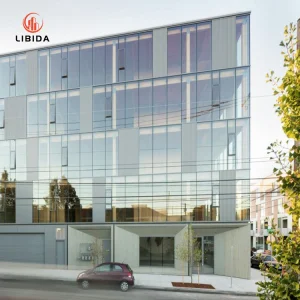
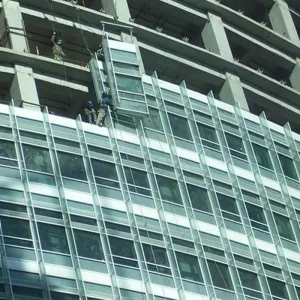
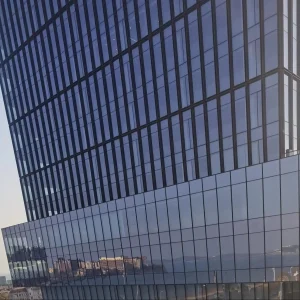
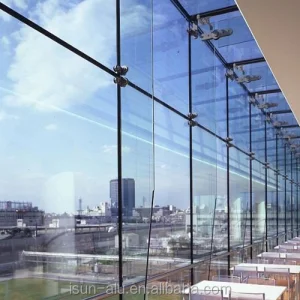
Explore our full line of commercial facade systems, including spider structures, frameless glass walls, and thermal break profiles.
Critical engineering, structural, and logistical questions answered by our lead facade engineers.
Our systems integrate multi-chamber extruded polyamide thermal barrier strips (PA66 GF25) within the aluminum framing profile. By physically separating the exterior aluminum and interior aluminum members, we eliminate thermal bridging. This is paired with custom triple-insulated glass units (containing double Low-E coatings, warm edge spacers, and argon gas fillings) to reach U-values down to 0.85 W/m²·K, fully complying with Russian SP 50.13330 thermal regulations.
For Western Russia (Moscow, St. Petersburg, Nizhny Novgorod), the fastest path is via the China-Europe Rail Express crossing at Manzhouli/Zabaikalsk. Rail transport typically takes 15 to 22 days from departure. For projects near Vladivostok or coastal Siberian zones, multi-modal maritime-rail freight or direct road trucking provides flexible transit options depending on cargo volumes and schedule requirements.
Yes, this is our core advantage. Operating under Shandong Bildon Steel Co., Ltd., we design, fabricate, and test both the primary structural steel frameworks and the exterior glass unitized systems. This unified workflow prevents dimensional mismatches, streamlines technical drawing approvals, and simplifies supply chain logistics by using a single manufacturer.
Absolutely. All materials, including aluminum profiles, safety tempered glass, structural silicones, and hardware, undergo rigorous testing. We prepare full technical packages for EAC (Eurasian Conformity) declarations and supply performance data matching SP 20.13330 (Loads and Actions) and SP 50.13330 (Thermal Protection) to support your local engineering validation.
Our Cadmium Telluride (CdTe) thin-film BIPV glass operates efficiently under low-light, diffuse solar radiation, and sub-zero temperatures. Unlike traditional crystalline silicon panels that experience performance drops in overcast skies, CdTe technology absorbs a broader spectrum of light, generating active power even during short winter days in St. Petersburg or Yekaterinburg.